Pet Travel Essentials Checklist for Dogs and Cats
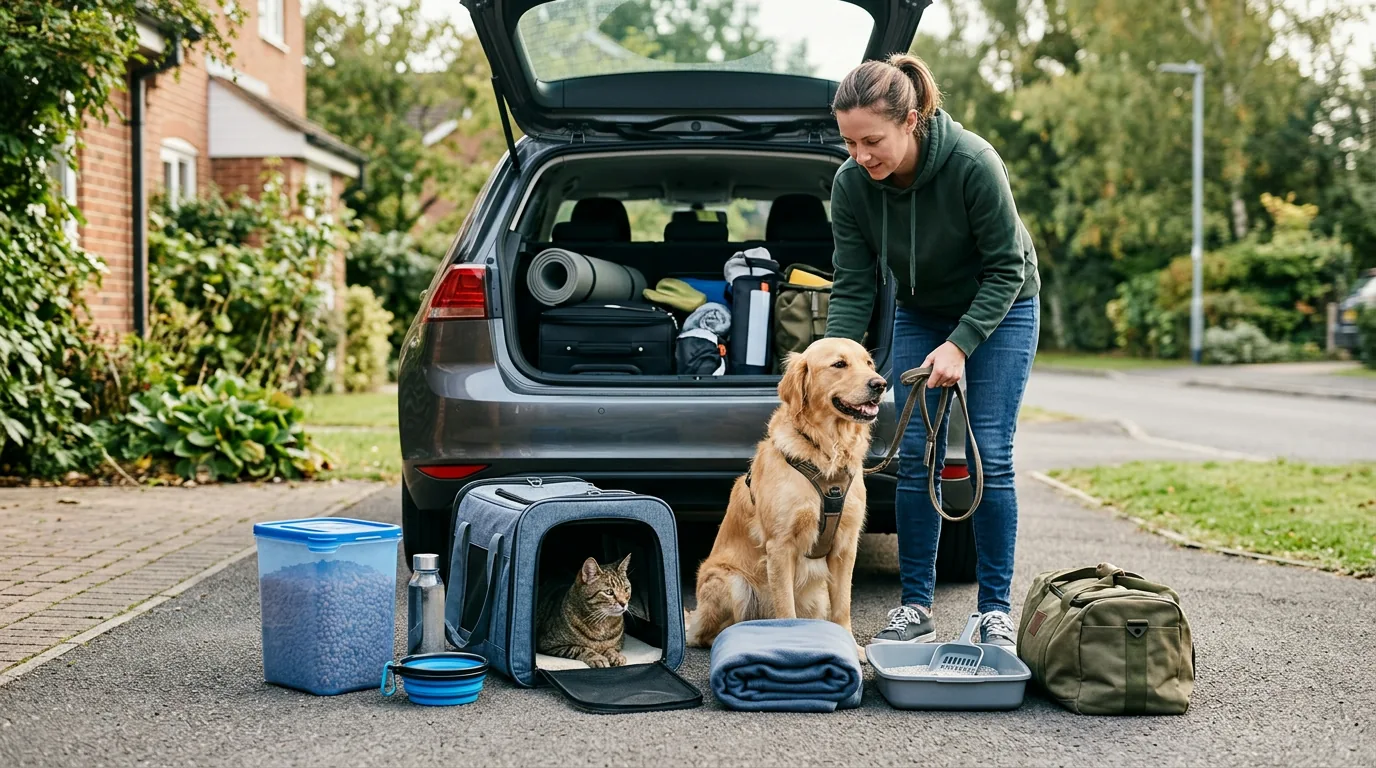
A little preparation can make a road trip or vacation with your dog or cat feel more manageable. Rather than trying to remember everything as you load the car, start with your pet’s everyday routine and then add supplies for the journey and destination. For more guidance, see Bringing Pets and Wildlife into the United States.
Our printable pet travel planner gives you a simple way to organize the essentials before departure. You can check off supplies as you pack and leave yourself time to handle the details that need advance attention. For further reading, see Pet Travel Safety.
Start With Your Pet’s Everyday Needs
Pack enough of your pet’s familiar food for the entire trip, plus a little extra in case you encounter delays. A sudden change in diet can upset some pets’ stomachs, so bringing their usual food can help you maintain a consistent routine. Store it in a secure container and bring any treats you normally use.
Include drinking water, travel bowls, medications and the supplies you use to administer them. If your pet takes medication, ask your veterinarian about storage needs and whether you should bring an extra supply. Keep medications in their original containers when practical.
Think through a typical day at home: feeding, walks, litter box use, grooming and any special care. For a cat, that may mean a portable litter box, litter and a scoop. For a dog, it may mean a leash, waste bags and a towel for muddy paws. Review your printable checklist before the bags go into the car so you can spot anything missing.
Pack for the Journey and Your Destination
Organize supplies by when you’ll need them. A small, accessible travel bag can hold water, a bowl, cleanup supplies and anything else you may reach for during a stop. Pack food, bedding and other arrival essentials where you can find them without unpacking the whole car.
| When | Items to consider | Why they help |
|---|---|---|
| During travel | Water, bowl, leash, waste bags and cleaning supplies | Makes stops and unexpected messes easier to manage |
| On arrival | Food, medication and familiar bedding | Helps maintain a comfortable routine |
| Throughout the stay | Identification, veterinary contact details and vaccination records | Keeps important information accessible |
Adapt the list to your pet and destination. A longer stay may call for more litter or food storage, while a trip with outdoor activities may require extra towels. Bring a familiar blanket or toy if it helps your pet settle, but keep loose items from interfering with the driver.
Prepare for a Safer Road Trip
Choose a carrier or travel restraint appropriate for your pet and vehicle, and secure it according to its instructions. Give your pet time to become familiar with the setup before a long drive. A secure arrangement helps prevent your pet from moving around the vehicle or distracting you while you drive.
Plan regular stops for water, bathroom breaks and exercise as appropriate for your pet. Keep your pet leashed or safely contained when opening the vehicle, and choose a quiet stopping area away from traffic when possible. Cats may need access to a litter box during longer journeys, so plan for a safe, contained place to offer one.
Never leave a pet alone in a parked vehicle. Temperatures can become dangerous quickly, even when the weather outside feels mild. If you’re traveling alone, plan food and restroom stops around places where your pet can remain safely with you.
For more preparation advice, consult the American Veterinary Medical Association’s guide to traveling with your pet.
Check the Details Before You Leave
Make sure your pet’s identification is current and that the phone number on the tag is one you can answer during the trip. If your pet is microchipped, confirm that the registration has your current contact information. A recent photo can also be useful if you need help locating a missing pet.
Confirm pet policies with your accommodation and check requirements for your destination before you travel. Rules may vary, especially when crossing borders. Ask your veterinarian about travel-specific health needs, including any recommended documents or precautions.
Keep your veterinarian’s number, an emergency contact and relevant vaccination records accessible on your phone or in a travel folder. You can also review the CDC’s pet travel guidance when planning your route.
Use the Printable Planner to Get Ready
Our Pet Travel Essentials Checklist for Safe Trips is a printable planning aid for dog and cat trips, available for $3.99. Check items off as you pack, then review your list once more before departure. Our team recommends keeping the completed list handy so you can use it again when it’s time to head home.
If your vacation is also a family trip, you may want a separate activity for conversations along the way. Our Talk & Connect parent-child communication workbook offers conversation starters for families and is available for $9.99.
FAQ
What should I pack for a dog or cat on a road trip?
Pack familiar food, water, bowls, medication, a secured carrier or restraint, identification, waste and cleaning supplies, and relevant health records. Add your pet’s routine supplies, such as a leash or litter box.
How can I keep my pet comfortable during a long drive?
Use a secure travel setup suited to your pet, bring a familiar blanket or toy, and make water accessible at regular stops. Plan breaks for bathroom needs and exercise as appropriate.
Do I need veterinary records when traveling with a pet?
Requirements vary by destination and accommodation, so check ahead. Keep relevant vaccination records and veterinary contact details accessible throughout your trip.












Leave a comment